

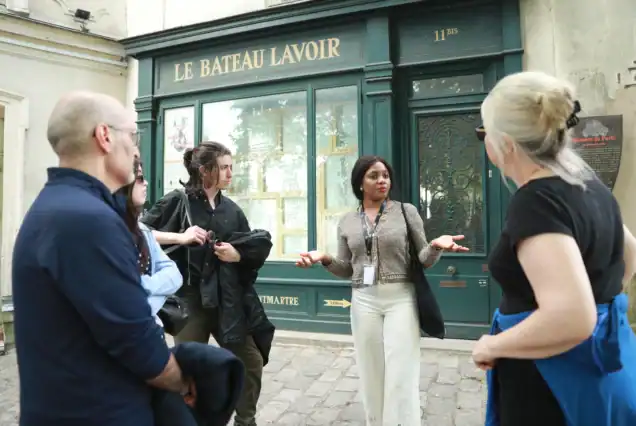
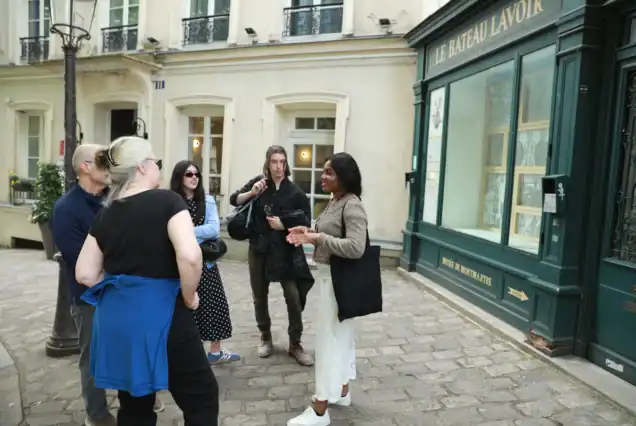
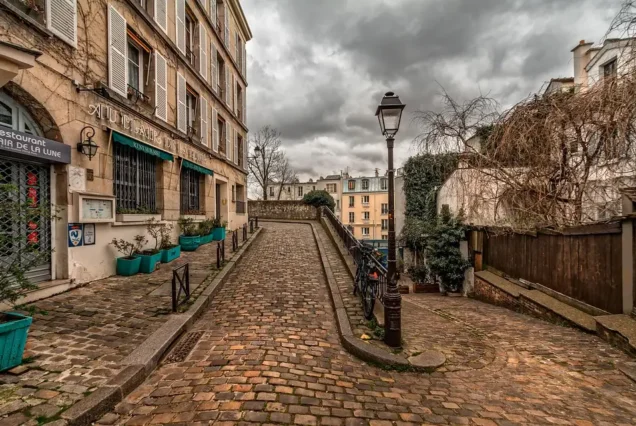
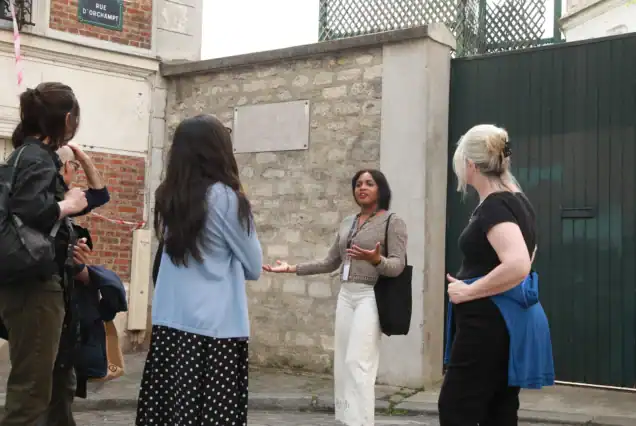
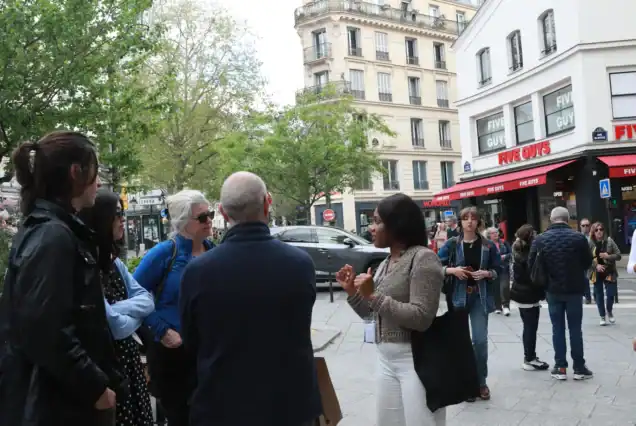
Explore Montmartre on a private walking tour and discover the neighborhood that shaped the artistic and bohemian soul of Paris. Once a hilltop village outside the city, Montmartre was home to painters, poets, rebels, and revolutionaries—and much of that spirit is still here today.
Your walk takes in Montmartre’s most iconic sights, including the Moulin Rouge, the former homes and hangouts of artists like Vincent van Gogh and Pablo Picasso, the I Love You Wall, and the lively Place du Tertre, where artists still work in the open air.
Along the way, your guide shares the stories behind Montmartre’s Belle Époque years, its old windmills, vineyards, and farms that once fed Paris, and how this small village became the creative heart of the city. You’ll also spot locations from Amélie and Emily in Paris, showing how Montmartre continues to inspire today.
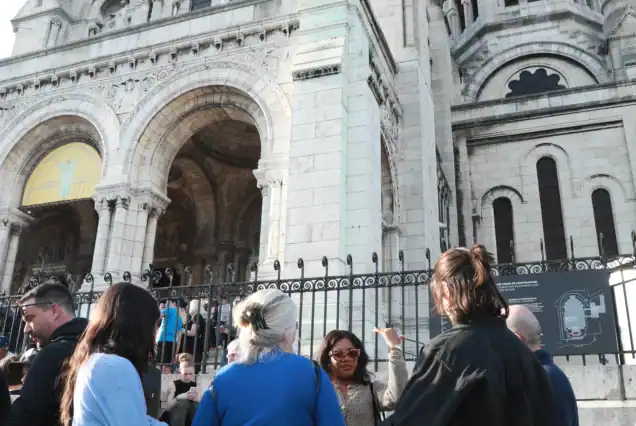
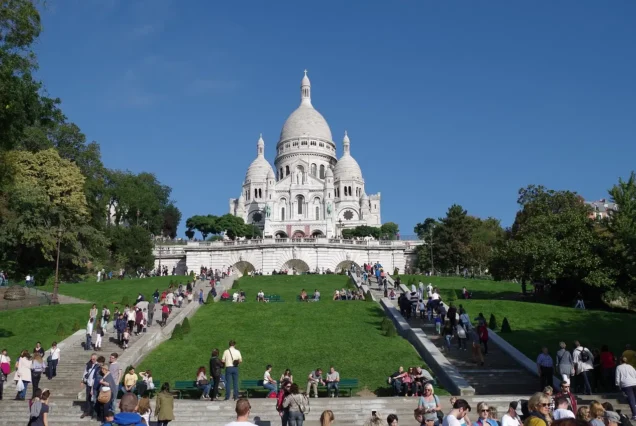
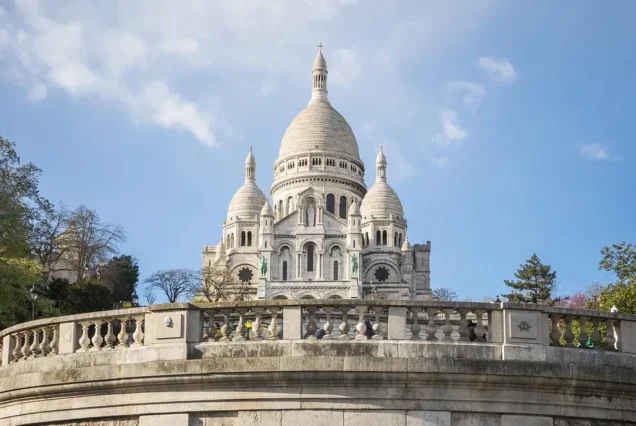
The tour finishes at Sacré-Cœur, where you’ll enjoy sweeping views from the highest natural point in Paris while learning the story behind this landmark basilica.
A relaxed, story-driven walk—perfect for travelers who want to understand Montmartre, not just see it.
Tour Highlights
-
Private walking tour of Montmartre with a local expert guide
-
See the Moulin Rouge from the outside and learn its Belle Époque history
-
Visit the former homes and streets linked to Vincent van Gogh and Pablo Picasso
-
Stop at the I Love You Wall and Place du Tertre, where artists still work today
-
Discover Montmartre’s windmills, vineyards, and village past
-
Finish at Sacré-Cœur with panoramic views over Paris
Included/Excluded
- Private walking tour of Montmartre
- Personalized commentary and pacing
- All major sights viewed from the outside
- Entrance tickets to monuments or museums
- Food, drinks, or personal expenses
- Gratuities (optional)
Tour Plan
Meeting point. The world's most famous cabaret (founded 1889). La Goulue, Toulouse-Lautrec, the can-can. The meaning of 'Place Blanche' — the white chalk dust from the old plaster quarries that gave the square its name. The two windmills that remain in Montmartre
The steep market street that descends from the Butte. Van Gogh lived at No. 54 with his brother Theo (1886–88) — the street where he transformed his palette from dark Dutch tones to the Impressionist colour he discovered in Paris. Renoir tested his early automobile engine on this hill. The two surviving Montmartre windmills visible: Moulin du Radet and Moulin de la Galette
Made famous as the café where Amélie Poulain works in Jean-Pierre Jeunet's 2001 film Amélie. The interior is unchanged from the film. The story of how a small Montmartre neighbourhood film became one of the most internationally recognised images of Paris.
| The 'Wall of I Love Yous' (Le mur des je t'aime) — created by artist Frédéric Baron and calligrapher Claire Kito. The phrase 'I love you' written 311 times in 250 languages on deep blue tiles. Inaugurated 2000. The story behind the project. |
The studio building where Picasso painted Les Demoiselles d'Avignon (1907) — the work that shattered European painting conventions and launched Cubism. Braque, Modigliani, Juan Gris, and Apollinaire were regular presences. The building burned in 1970; the rebuilt version is still used by artists today
| Small square with the bust of Dalida — the Egyptian-born singer who became one of France's most beloved performers and lived in Montmartre from 1962 until her death in 1987. Her house is visible from the square (11 Rue d'Orchampt). Her extraordinary life story: three suicides of partners, her own death by overdose. She sold over 170 million records. |
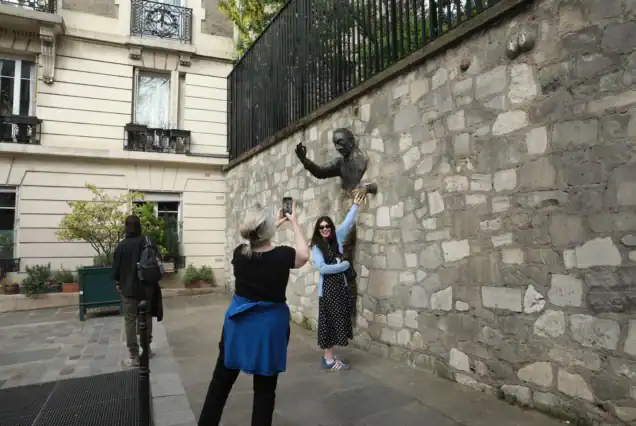
The bronze sculpture of a man emerging from a wall — based on Marcel Aymé's 1943 story of a man with the gift of passing through walls. Sculpted by Jean Marais (actor and companion of Jean Cocteau). The story of Aymé and why this corner of Montmartre was his home.
| The last surviving working windmill of Montmartre's original 30. Subject of Renoir's masterpiece Bal du Moulin de la Galette (1876) — now in the Musée d'Orsay. The mill ground galette (flour for the flat cakes sold at the popular outdoor dance hall). The Debray family who owned it and defended it from Prussian troops in 1814. |
One of the most beautiful and photographed streets in Paris — narrow cobblestones, ivy-covered walls, the famous pink house (La Maison Rose, made famous by the painter Utrillo). The vineyard of Montmartre visible at the end of the street (Clos Montmartre — still producing ~1,500 bottles of red wine per year, harvested each October
The square of artists — painters and portraitists since the 19th century. The story of the 1871 Paris Commune: the barricades erected here, the execution of General Lecomte by his own troops on this square, and the role of Montmartre in the last revolutionary insurrection of 19th-century France. The artist colony that replaced the revolutionary history
The tour ends at the summit. The Basilica of the Sacred Heart was built between 1875 and 1914 — deliberately placed on the stronghold of the Commune, funded by the conservative Catholic establishment as an act of 'national penance' for the excesses of 1871 and the Franco-Prussian War defeat. Classified as a historic monument only in 2022, after decades of political controversy about its symbolism. The view over Paris from the steps.
You May Like
Private Notre Dame Cathedral and Île de la Cité Walking Tour

Louvre Museum Highlights Tour with Expert Guide

Giverny, Mont Saint-Michel & D-Day Beaches 2-Day Private Tour from Paris
