Walking Through the First City of Paris
Most people arrive on the Île de la Cité believing they are standing at the beginning of Paris.
The towers of Notre-Dame Cathedral feel eternal, anchoring the city in the Middle Ages.
But Paris did not begin here and it certainly did not begin in the 12th century.
Long before the cathedral, before medieval walls, before kings and revolutions, this was already a city. A Roman city. And once you know where to look, traces of that world are still everywhere.
Before Notre-Dame: Paris Was Lutetia
When the Romans arrived in the 1st century BCE, they found a small Gallic settlement belonging to the Parisii tribe. They did what Romans always did best: they organized it.
They called the city Lutetia.
The Île de la Cité was chosen not for beauty, but for control. From this island, Roman authorities could regulate movement along the Seine, collect taxes, and administer the surrounding territory. It was compact, defensible, and practical.
This is why power has never left the island.
From Roman governors to medieval kings to modern courts, authority in Paris has always gravitated back here.
The Crypt of Notre-Dame: Where Paris Reveals Its Oldest Layers
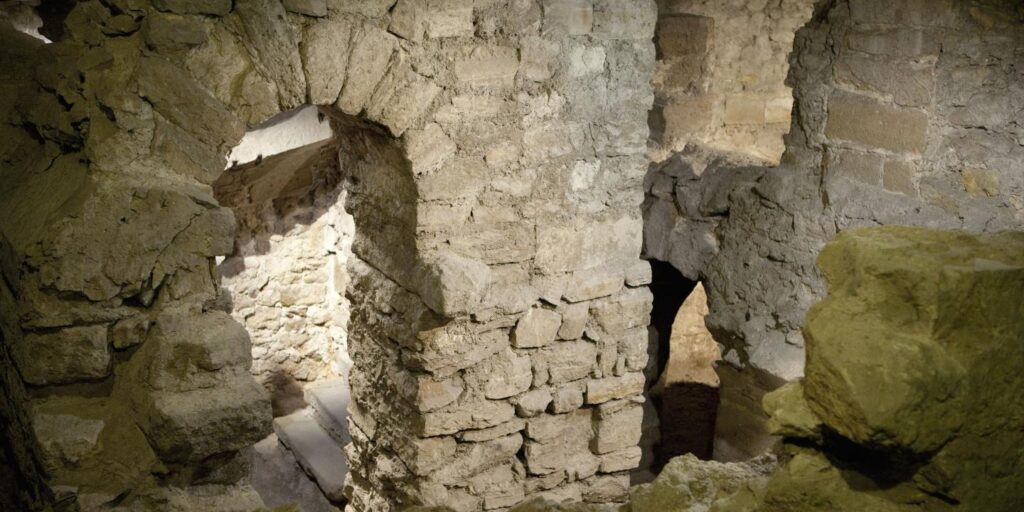
What most visitors don’t realize is that the real foundation of Paris sits beneath the square in front of Notre-Dame.
The Crypte archéologique de l’Île de la Cité was uncovered in the 1960s during redevelopment work around the cathedral. As modern paving was removed, archaeologists found something unexpected: Roman streets, walls, and homes preserved under centuries of construction.
Inside the crypt, you don’t see a single monument, you see continuity.
Roman roads curve gently, following the river’s logic.
Walls show multiple phases of repair, reused and reinforced over time.
Medieval builders did not demolish Roman Paris they built directly on top of it.
Standing there, it becomes clear:
Notre-Dame is not the beginning of Paris. It is one moment in a much longer story.
Why Roman Paris Crossed the River
While administration remained on the island, everyday Roman life quickly moved elsewhere.
The Left Bank offered what the Île de la Cité could not: space and stability. The land was higher, drier, and better suited to large public buildings. Romans didn’t build randomly cities were planned around function.
So Lutetia expanded south.
This decision shaped Paris permanently. Even today, the Left Bank feels different because it was conceived differently from the start.
The Left Bank: Where Roman Paris Lived, Bathed, and Learned
On the Left Bank, Roman Paris became a living city.
Public baths were not just about hygiene they were social centers, places to meet, talk, and be seen. Forums structured civic life. Schools and intellectual spaces emerged early, laying the groundwork for what would later become the academic identity of this side of Paris.
This was not a temporary settlement.
It was a city designed for daily routine, comfort, and community.
The Roman street grid influenced medieval roads, which still shape modern Parisian neighborhoods. When people say Paris has “good bones,” this is what they mean.
The Musée de Cluny: A Reference Point, Not a Starting Point
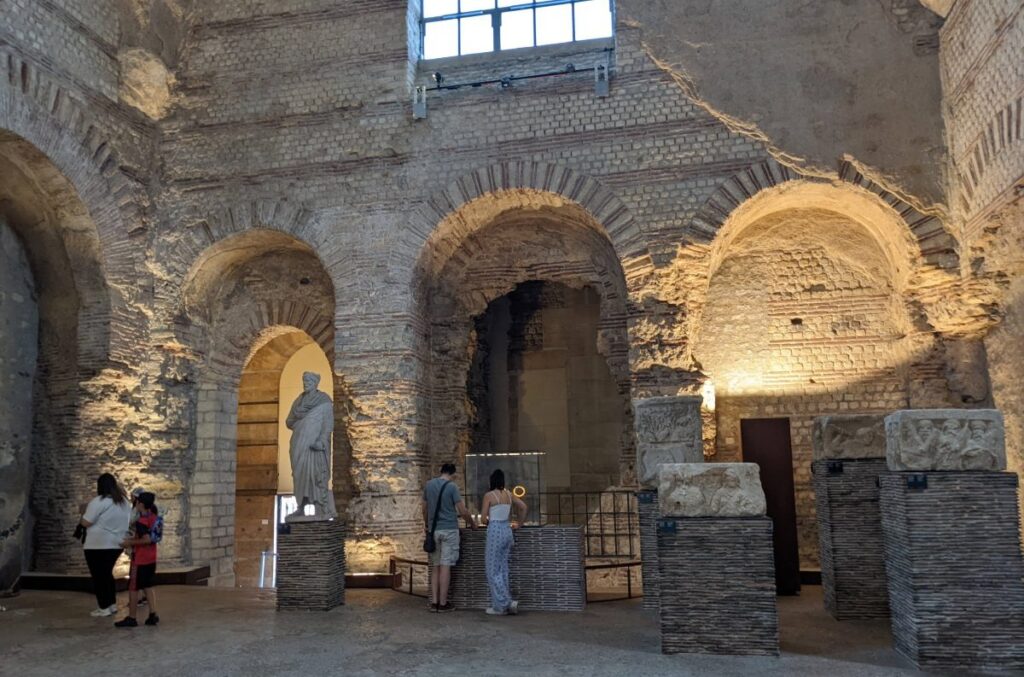
The Musée de Cluny is often introduced as a medieval museum, but its importance for Roman Paris is fundamental.
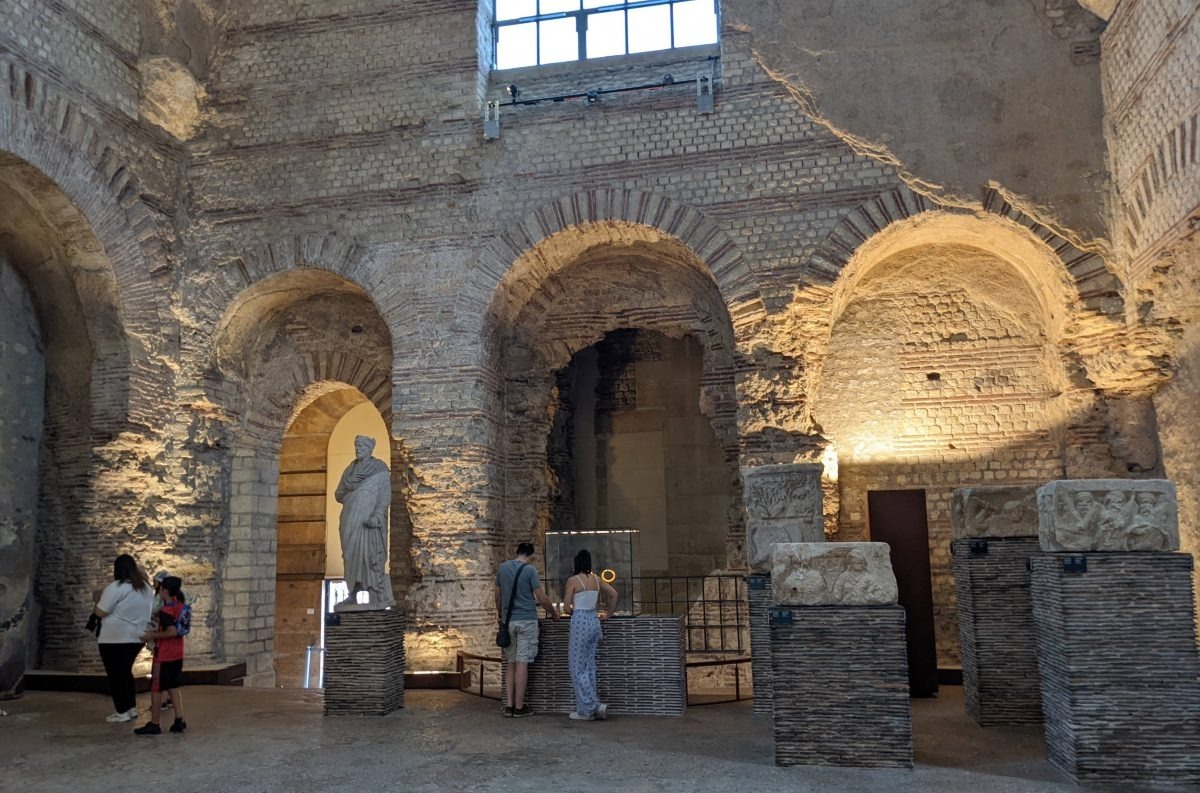
The museum is built directly on the Roman baths of Lutetia, and the vast frigidarium still stands almost intact. The scale is striking high stone walls, massive proportions, a reminder that Roman Paris was confident and permanent.
Cluny is not where the story of Roman Paris begins.
It is where that story becomes easiest to visualize.
It confirms what the crypt suggests: Roman Paris was substantial, organized, and deeply influential long after the empire faded.
Paris Before Notre-Dame: A City That Never Vanished
Seen together, these places tell a quiet but powerful story.
- The Île de la Cité established authority
- The Crypt of Notre-Dame preserves physical evidence
- The Left Bank reveals daily Roman life
- Cluny anchors Roman Paris in the visible city
Paris didn’t replace its past it absorbed it.
That’s why the city feels layered rather than fragmented. Each era rests on the last.
Experience Roman Paris on Our Notre-Dame Island Private Tour
Most Notre-Dame tours focus on what you can see above ground.
Our Notre-Dame Island private tour focuses on what came before.
By walking the Île de la Cité, exploring the Crypt of Notre-Dame, and understanding how Roman Paris expanded toward the Left Bank, this experience gives you the keys to read Paris differently.
You won’t just visit Notre-Dame.
You’ll understand why it stands exactly where it does.
Paris only truly reveals itself once you know what lies beneath.
If you’re curious about the origins of Paris not just its monuments this is where the story begins. Interested in exploring more of Paris? Discover our full range of Paris tours.